


How To Get Noticed By Recruiters
Feel like you’ve been looking for a job forever but you’re just not getting the calls? Why is it that some people are constantly being contacted by recruiters and others not? You have the same credentials, the same experience and you’re awesome, right?! Well, the game has changed. When we were at school we…

Feel like you’ve been looking for a job forever but you’re just not getting the calls? Why is it that some people are constantly being contacted by recruiters and others not? You have the same credentials, the same experience and you’re awesome, right?!
Well, the game has changed.
When we were at school we were taught that our CV is key. It must be well written, have good grammar, have no spelling mistakes and be concise. While this is still true there is another step to get right in order for our fab CV to get noticed by the right people.
Recruitment now works with databases and big data sources. If you have applied for a job somewhere online or with a recruiter your details will live in a database somehwere (don’t freak out, that’s a good thing!). It could be an online job tool or some kind of CRM system – it’s where your info is stored and generated for searches. For CV is important sure, but in order to get it seen your data in the system has be right in the first place – it has to create the right flags so that YOU show up when a recruiter searches for candidates with your experience and skill set.
There are thousands of databases out there and millions of different people and resumes. Here are some tips to help get yours to the top of a recruiter’s search results:
- Repetition; the power of 3’s. Database searches work with key words. The more experience you have the more the database expects the key words to be repeated in your profile or in your CV. For example, if you are looking for a job as a java developer then make sure that the precise term ‘java developer’ appears at least 3 times in your C.V. That way, the system thinks it’s a core skill set of yours.
- Get on the phone. Getting off the computer and speaking to a recruiter in person allows you to make a personal connection and to update the information listed in their CRM to make sure it includes the right stuff. You also get the added benefit of being more top of mind should a role come up.
- Use buzz words. If there are buzz words relevant to your role and industry then use them! We humans may get sick of them but computers don’t and they are often used in role descriptions sent to recruiters by employers to help them look for candidates.
- List your technical skills. Recruiters generally don’t sit down and search for candidates with words like “team player”or “passionate” but they will search for skills. So list them all and repeat key ones that you want to be noticed (back to the power of 3’s!).
- Think like someone looking for YOU. If you were looking for you, how would you find yourself in a search? Or if you were looking for someone similar, how would you find them? It helps to get in the mindset to evaluate your communication impartially.
- Graduates, write ‘graduate’ on your CV! Because you dont have much experience it is harder to show up in searches – there’s less words and key terms to pick up on, after all. likely won’t show up, at all. Include the word “graduate” in your CV or on your profile. This is what recruiters are looking for -graduates to fill graduate roles! You must also include relevant qualifications and the title of those such as “HCS” and “ATAR” as they are also important search words.
The digital age requires a shift in thinking. Think not only about the product – your CV think also how that product will reach your market, recruiters. The game may have changed but all thats needed is a tweak in approach.
This article was written by Lydia Smith, founder of the interactive children’s book ‘Bookywoo’. Explore her product online and follow @BookWoo on social media!
The latest from our blog
All things IT and recruitment, straight from our team.

A Candidate Cheat Sheet to How Recruitment Actually Works
If you have spent years in a stable role, navigating the recruitment market can feel unfamiliar. Simple misunderstandings about agency fees, contracting rates, and representation often cause unnecessary hesitation. Here is our straightforward candidate cheat sheet breaking down exactly how recruitment works, debunking common myths, and explaining how to get the best out of your...

Operational Lessons: The Reality of Counter Offers
When a key team member resigns, making a financial counter-offer is a common reactive strategy to protect project timelines. However, market data shows that nearly one-third of employees who accept these offers still leave within twelve months. Here is a balanced look at what counter-offers actually achieve, why they often fail to address the root...

Operational Lessons for Managing Interview Processes
Every business requires a different approach to hiring, but over engineering or rushing an interview process will actively drive top talent away. Having managed hundreds of hiring loops across the technology sector, we have seen firsthand what works and what fails. Here are our practical, real world lessons on how to design an interview process...
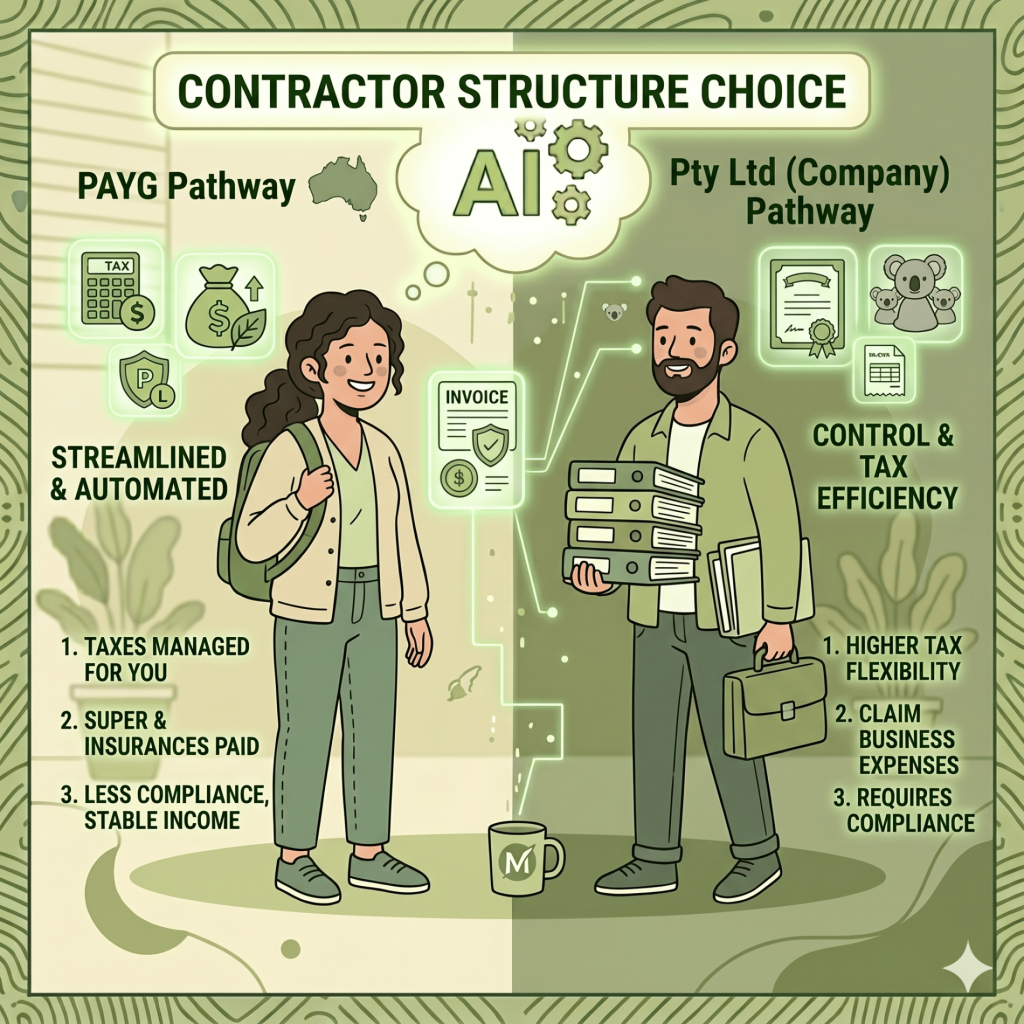
PAYG vs Pty Ltd Contractor Structures
Deciding whether to contract through a PAYG or a Pty Ltd structure impacts your tax positioning, administrative workload, and insurance coverage. This guide provides a direct comparison of both pathways to help you choose the right setup for your next government or hardware engineering contract.

The Highest Paid Programming Languages in 2026
What are the highest paid programming languages in 2026? What is most in demand? And where are the best opportunities in software development right now?

Using AI Responsibly to Write Your CV
Build a better CV without the bot feel. Learn how to use AI to articulate your experience, tailor your applications, and create a professional draft that still sounds like you.

Motion Recruitment: Your Prequalified SCM0007 Partner for NSW Government ICT talent
Motion Recruitment is officially a prequalified supplier under the NSW Government SCM0007 Scheme for ICT Categories G, H, and I. Discover how our decade of specialist technology expertise helps NSW Government agencies and Sydney-based eligible customers secure high-caliber contingent talent with full statutory compliance and capped, transparent pricing.

Scam Alert – Scammers Impersonating our Consultants
Scammers are impersonating our consultants - Learn how to spot and protect yourself from the latest recruitment scams targeting job seekers, including fake interviews and fraudulent job offers.

How to Negotiate your Salary in a Recruitment Process
Learn how to negotiate your salary confidently in today’s job market. This guide from Motion Recruitment covers practical steps, realistic strategies and the key conversations that help candidates secure stronger offers and better overall packages.

Preparing for an Interview: Essential Steps
Interview prep doesn’t have to be complicated. From your elevator pitch to body language, our no-fluff guide covers the essentials to help you walk in with confidence.